The highest-earning riders of 2025: three disciplines, three economic models
Hippomundo analysed the earnings of the 30 highest-earning riders in jumping, dressage and eventing for the year 2025. The figures not only show who is successful in sport, but also reveal the underlying economic structures of each discipline. Although all three are practised internationally, they differ strongly in scale, earning potential and income distribution.
Jumping: scale, volume and international dominance
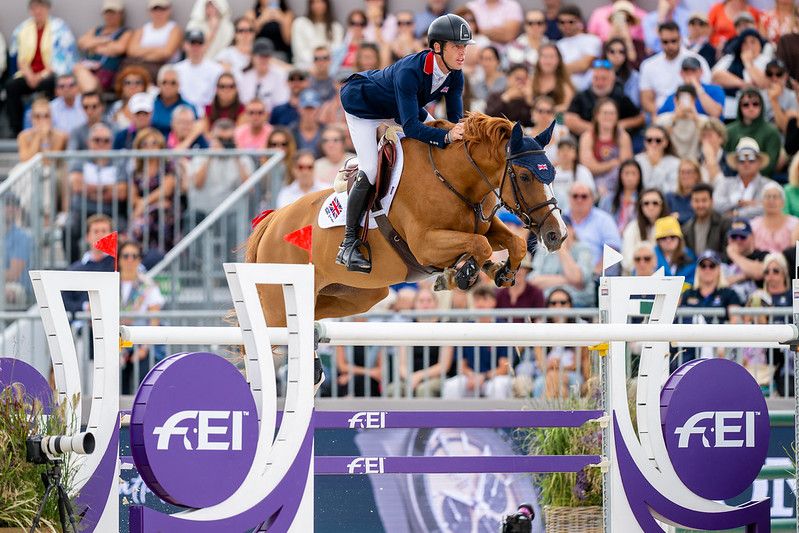
The jumping discipline confirms its status as the economic powerhouse of equestrian sport. The top 30 jumping riders generate revenues that are multiple times higher than those in dressage and eventing.
Key trends:
-
Very high total earnings at the top, with several riders exceeding €2 million
-
Large numbers of horses per rider (often 10 to more than 20 horses)
-
Strong correlation between horse volume and earnings
-
Dominance of riders from the United Kingdom, France, Germany and the USA
The rankings are led by riders operating within large-scale, professionally structured stables. Their income is not only the result of prize money, but also of continuous participation at the very highest international level.
What stands out is that the average return per horse is relatively lower than in dressage, but this is more than compensated by volume and frequency of starts. Jumping clearly follows a high-volume business model.
| Place | Rider | Earnings | # Horses |
|---|---|---|---|
| 1 | Scott Brash | €3.516.868 | 8 |
| 2 | Kent Farrington | €2.473.232 | 9 |
| 3 | Simon Delestre | €2.006.925 | 13 |
| 4 | Gilles Thomas | €1.999.562 | 17 |
| 5 | Yuri Mansur | €1.741.666 | 22 |
| 6 | Emanuele Gaudiano | €1.661.746 | 13 |
| 7 | Laura Kraut | €1.614.241 | 11 |
| 8 | Christian Kukuk | €1.602.414 | 11 |
| 9 | Peder Fredricson | €1.469.087 | 11 |
| 10 | Richard Vogel | €1.410.052 | 28 |
Certified by Hippomundo © 2026
Dressage: fewer horses, higher efficiency
The dressage ranking shows a fundamentally different profile. Total earnings are lower in absolute terms, but efficiency per horse is remarkably high.
Key characteristics
-
Significantly fewer horses per rider (often 1 to 3)
-
High win and placing percentages
-
Greater dependence on top combinations
-
Strong presence of Western European riders, particularly from Germany, the Netherlands and Denmark
In dressage, a single exceptional horse can define a career and an income stream. Earnings are more concentrated and less diversified than in jumping. This makes the discipline economically more vulnerable, but also highly performant per combination.
Dressage clearly functions as a high-precision model: fewer horses, fewer starts, but maximum value per appearance.
| Place | Rider | Earnings | # Horses |
|---|---|---|---|
| 1 | Isabell Werth | €262.035 | 7 |
| 2 | Justin Verboomen | €221.574 | 2 |
| 3 | Charlotte Fry | €149.857 | 8 |
| 4 | Isabel Freese | €127.303 | 1 |
| 5 | Cathrine Laudrup-Dufour | €124.289 | 2 |
| 6 | Patrik Kittel | €117.753 | 5 |
| 7 | Becky Moody | €112.957 | 3 |
| 8 | Sandra Sysojeva | €108.424 | 2 |
| 9 | Frederic Wandres | €107.385 | 3 |
| 10 | Matthias Alexander Rath | €104.011 | 2 |
Certified by Hippomundo © 2026
Eventing: sporting intensity, limited earning capacity
Eventing ranks lowest in terms of earnings, despite the high sporting and physical demands of the discipline.
Characteristic trends:
-
Lower total earnings within the top 30
-
Limited number of horses per rider (usually 5 to 10)
-
Fewer international competitions with high prize money
-
Strong representation of riders from the United Kingdom, Ireland and the USA
Although eventing riders often perform very consistently and achieve high placing percentages, the economic ceiling of the discipline remains clearly lower. Income is more dependent on championships and a limited number of major events.
Eventing therefore remains primarily a sport-driven discipline, where passion and performance outweigh financial return.
| Place | Rider | Earnings | # Horses |
|---|---|---|---|
| 1 | Rosalind Canter | €325.238 | 5 |
| 2 | Boyd Martin | €260.955 | 12 |
| 3 | Harry Meade | €250.424 | 9 |
| 4 | Tim Price | €153.010 | 11 |
| 5 | Michael Jung | €148.740 | 6 |
| 6 | Austin O'Connor | €130.765 | 6 |
| 7 | Tom McEwen | €101.262 | 8 |
| 8 | Felix Vogg | €97.742 | 8 |
| 9 | William Coleman | €96.748 | 7 |
| 10 | Oliver Townend | €85.065 | 4 |
Certified by Hippomundo © 2026
Comparison between the disciplines
| Discipline | Earnings | # Horses | Model |
|---|---|---|---|
| Jumping | Very high | High | Volume & scale |
| Dressage | Medium | Low | Efficiency per combination |
| Eventing | Lower | Medium | Consistency & championships |
The figures clearly show that each discipline has its own economic ecosystem:
- Jumping grows through scale and internationalisation
- Dressage maximises value per horse
- Eventing remains sportingly intense but financially more limited
Conclusion
The Hippomundo ranking of 2025 makes it clear that income in equestrian sport is not determined by sporting success alone, but also by structure, discipline and strategy. While jumping relies on volume and global circuits, dressage revolves around exceptional combinations and precision. Eventing remains the most demanding discipline, but with the smallest financial return.
By centralising this data, Hippomundo not only shows who wins, but above all how and why income is generated within each discipline.