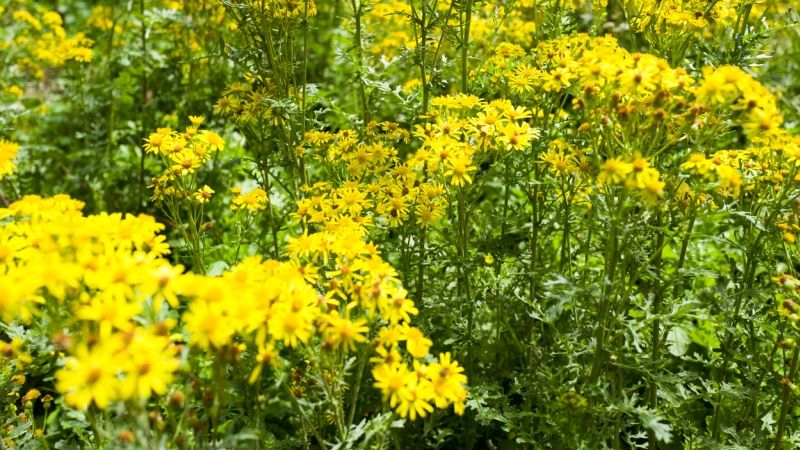

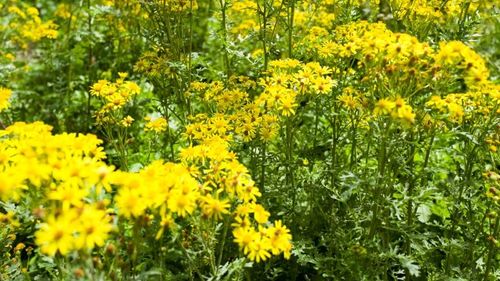
What is the name of that yellow flower no horse owner wants to see in their field? Well, turns out there is two plants with yellow flowers you might want your horses to steer clear of: ragwort and St-John wort. We will elaborate on the differences between them and the damage they can do to your horse's health.
Ragwort
Characterisation
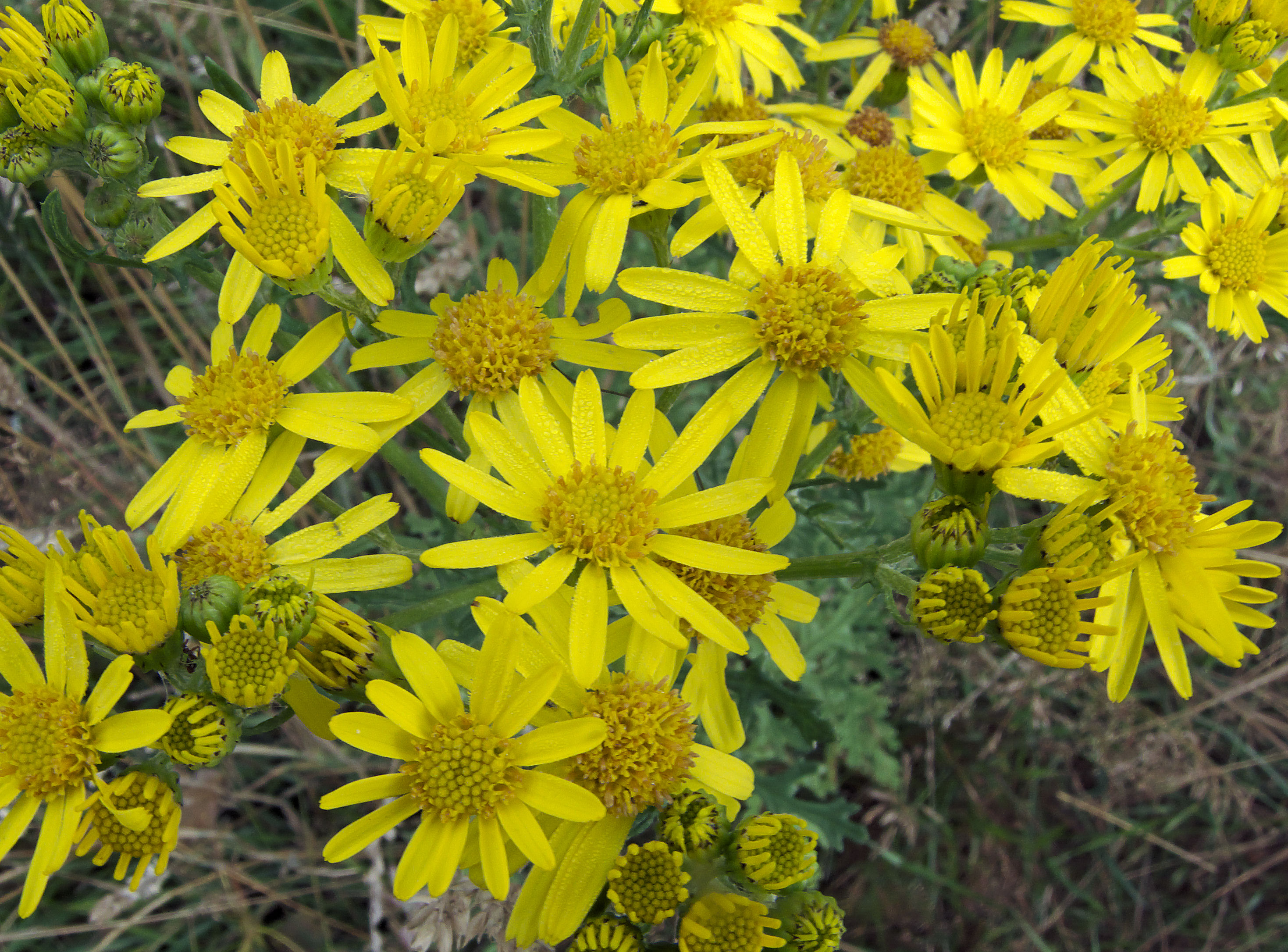
Ragwort is a biennial weed. This means that in their first year only the rosettes will grow and they can be found throughout the year. Only in their second year will the weed bloom, usually from June until October. After the plant has formed seeds, it will die. The leaves of ragwort are lyre-shaped and lobed and can be recognised by their flower heads, that will grow up to 1.5 cm - 2.5 cm in flat-topped clusters of 12 - 15 bright yellow florets.
Toxicity
Ragwort is the most notorious out of both of them. Ingestion of this plant by a horse can be poisonous to the animal. A horse that ingests 0.05 - 0.20 kg per kilogram of body weight can be at risk of liver damage. Horses will only nibble on ragwort in times of food scarcity, so in normal circumstances it won't pose any issues. However ragwort stays as poisonous in dried form, but horses won't recognise it as toxic. This means it can be incredibly dangerous if dried ragwort ends up in hay.
Symptoms of ragwort poisoning
A horse that has ingested small amounts (200 grams) of ragwort over a time period of a couple of months or 900 grams daily for two weeks, will experience ragwort poisoning which comes with a variety of symptoms. In early stages of the poisoning a horse can experience weight loss, appear weak or lethargic, excessive yawning, bad coordination and yellow discolouration of the mucus membranes. After the liver has been affected, a horse can exhibit neurological problems such as aimlessly roaming around and excessive chewing movements. These symptoms can appear months after the initial exposure and can have fatal consequences to the horse.
St-John's wort
Characterisation
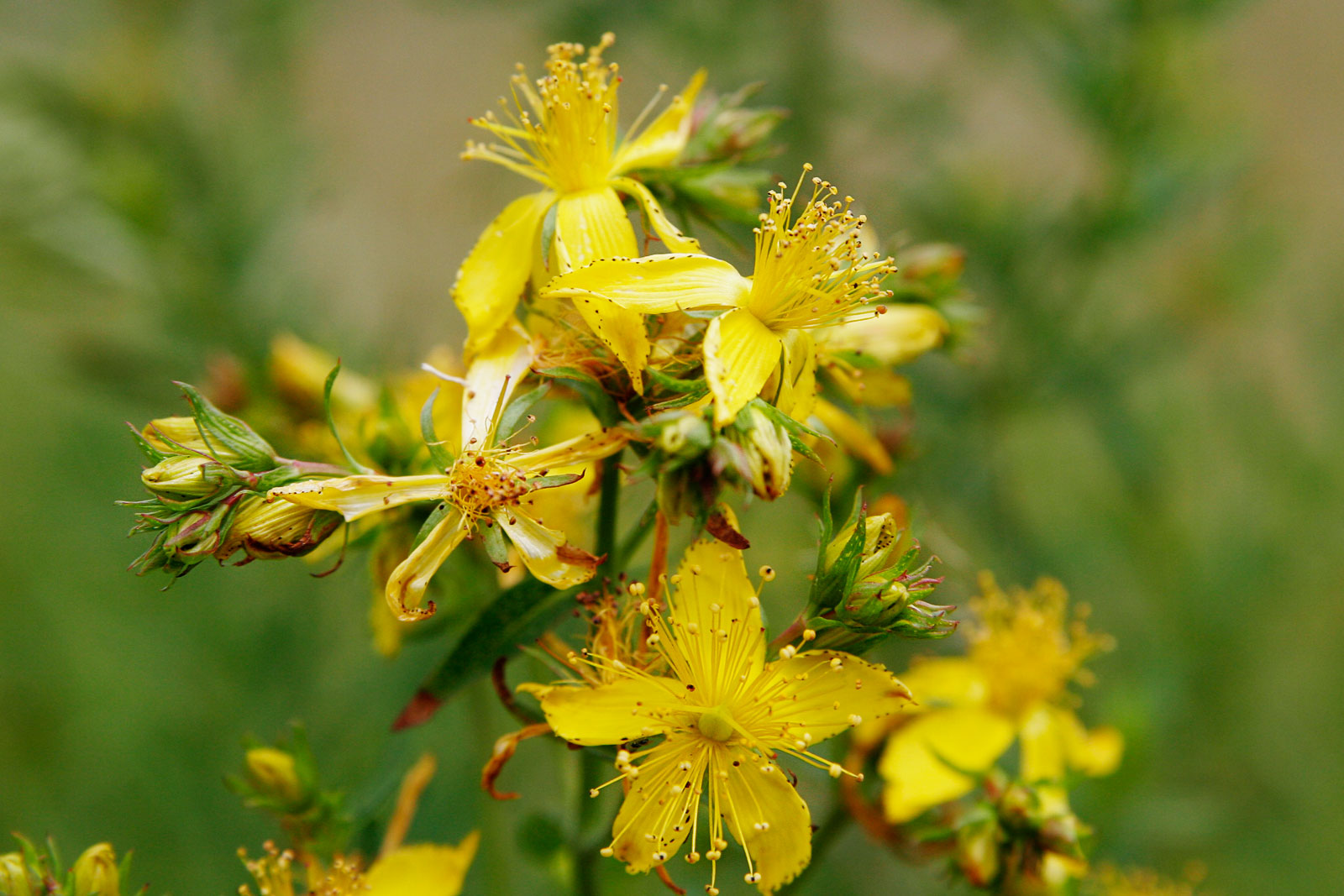
St-John's wort will grow up to 85 cm tall and has a red stalk with up to two branches. The leaves of St-John's wort are bald, oval-shaped to egg-shaped, grow up to 3 cm long and are covered in translucent dots of glandular tissue. The flowers measure up to 2.5 cm, have five petals and sepals, and are coloured bright yellow with conspicuous black dots.
Toxicity
St-John's wort is less poisonous to horses than ragwort and will contain even less toxins in dried form. Horse will start to experience symptoms after ingesting 2 kg of fresh St-John's leaves for a couple of days in a row.
Symptoms of St-John's wort poisoning
The main symptom of poisoning by St-John's wort in horses is photosensitivity. This is caused by the toxin, hypericine, that builds up on the horse's skin and makes it sensitive to the sun. A horse's mucus membranes are the most affected with watery, infected eyes, corneal lesions, possible blindness, swelling of ears, mouth and/or vulva. These horses will also experience a loss of appetite and come across as irritated and/or sensitive to the touch, especially around the head and legs.
More information on ragwort, St-Johns wort or other poisonous plants can be found at http://paarden-blaadjes.nl/diversen/giftige-planten.html