

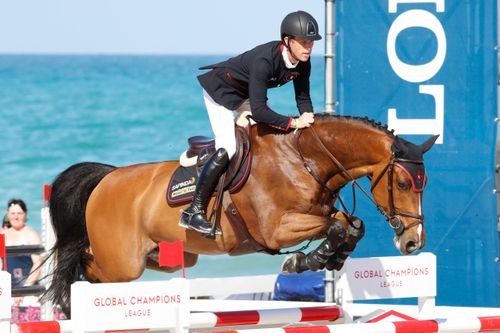
Prize money is one of the simplest ways to measure the financial success of a showjumping career. It does not tell the whole story, of course, but over a longer period it can reveal something about consistency, longevity and the ability to remain at the highest level.
Using the Hippomundo Riders Ranking and looking at the top 10 riders by prize money for each year from 2016 through 2025, we can see how the landscape of the sport has changed over the past decade. Some names have been almost permanent fixtures, while others enjoyed a spectacular period at the very top before disappearing from the list.
Scott Brash: the decade's most consistent big earner
If there is one name that defines this ranking, it is Scott Brash. The British rider appears in the top 10 in 2016, 2017, 2021 and 2025, and most recently returned to the very top with an extraordinary €3,516,868 in prize money.
In fact, Brash leads the current 365-day ranking as well, with €3,610,416. His 2025 figure is therefore not only the highest amount recorded by any rider in the supplied yearly rankings, but also comfortably ahead of the second-placed Kent Farrington.
Brash's decade is particularly interesting because his appearances at the top are spread across the entire period. He was number one in 2016, remained in the top 10 in 2017, disappeared from the annual top 10 for several years, and then came roaring back in 2025.
He is far from the only rider to demonstrate this kind of longevity.
The names that keep coming back
Several riders have turned consistency at the highest level into an impressive decade-long presence.
Daniel Deusser is perhaps the clearest example. The German appears in the top 10 in 2016, 2018, 2019, 2020, 2021, 2022 and 2024 — seven times in ten years. He was number one in 2019 (€2.67 million), 2021 (€1.52 million) and 2022 (€2.45 million).
Kent Farrington is another constant. He appears in 2016, 2017, 2020, 2021 and 2025, including two number-one finishes. His €1.89 million in 2017 and €2.47 million in 2025 show just how high his earning ceiling can be.
Steve Guerdat features in five editions, while Harrie Smolders, Ben Maher, McLain Ward, Martin Fuchs, Julien Epaillard, Henrik von Eckermann and Darragh Kenny also make repeated appearances.
This creates an interesting picture: the riders who consistently earn the most are not necessarily the ones who dominate a single season, but those who manage to remain competitive across several generations of horses.
From established stars to a new generation
The rankings also show a clear generational shift.
In 2016, the top 10 was dominated by riders who were already established names: Scott Brash, McLain Ward, Christian Ahlmann, Daniel Deusser, Kent Farrington and Marcus Ehning all featured in the top six.
By 2025, several of those names had disappeared from the top 10, while a younger generation had emerged. Gilles Thomas and Richard Vogel are particularly striking examples. Thomas climbed all the way to fourth with almost €2 million, while Vogel entered the top 10 after finishing seventh in 2023.
The current 365-day ranking continues that trend. Vogel is now second with €2.88 million, while Thomas is sixth with €1.61 million.
The likes of Christian Kukuk and Richard Vogel therefore represent more than just new names on the list: they illustrate how quickly a rider can move into the financial elite once the right combination of form, horses and opportunities comes together.
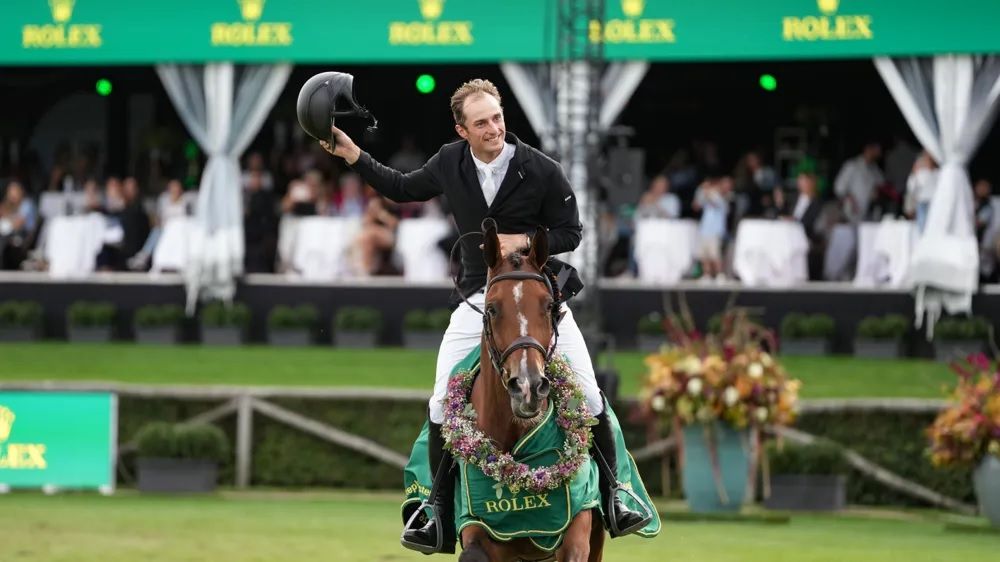
2020: the year that broke the pattern
One number immediately jumps out when comparing the yearly totals.
From 2016 to 2019, the combined prize money of the top 10 ranged from approximately €12.5 million to €18.1 million. In 2020, however, the top 10 collectively earned just €4.36 million.
That is by far the lowest figure of the decade.
The reason is obvious: 2020 was heavily disrupted by the COVID-19 pandemic, with the international showjumping calendar dramatically reduced. The effect can also be seen at the individual level. Julien Epaillard led the ranking with €706,755 — less than half of Scott Brash's winning figure from 2016.
The recovery was rapid. The combined prize money of the top 10 rose to €11.64 million in 2021, €14.91 million in 2022 and €17.25 million in 2023.
By 2025, it reached a decade-high €19.50 million.
Who are the real millionaires of the decade?
Looking across all ten annual rankings rather than focusing on individual seasons gives an even clearer picture.
Based on the prize money figures supplied for 2016–2025, Daniel Deusser comes out as the biggest cumulative earner among the riders who repeatedly featured in these rankings, followed by a group of riders including Kent Farrington, Scott Brash, Martin Fuchs and Henrik von Eckermann.
But the numbers need some context: these are the top-10 annual ranking figures, not a complete career earnings total. They therefore measure how much each rider earned during the seasons in which they appear in the supplied top 10, rather than their entire career prize money.
One rider does stand out statistically: Daniel Deusser appears seven times in the top 10, more than anyone else in the supplied decade.
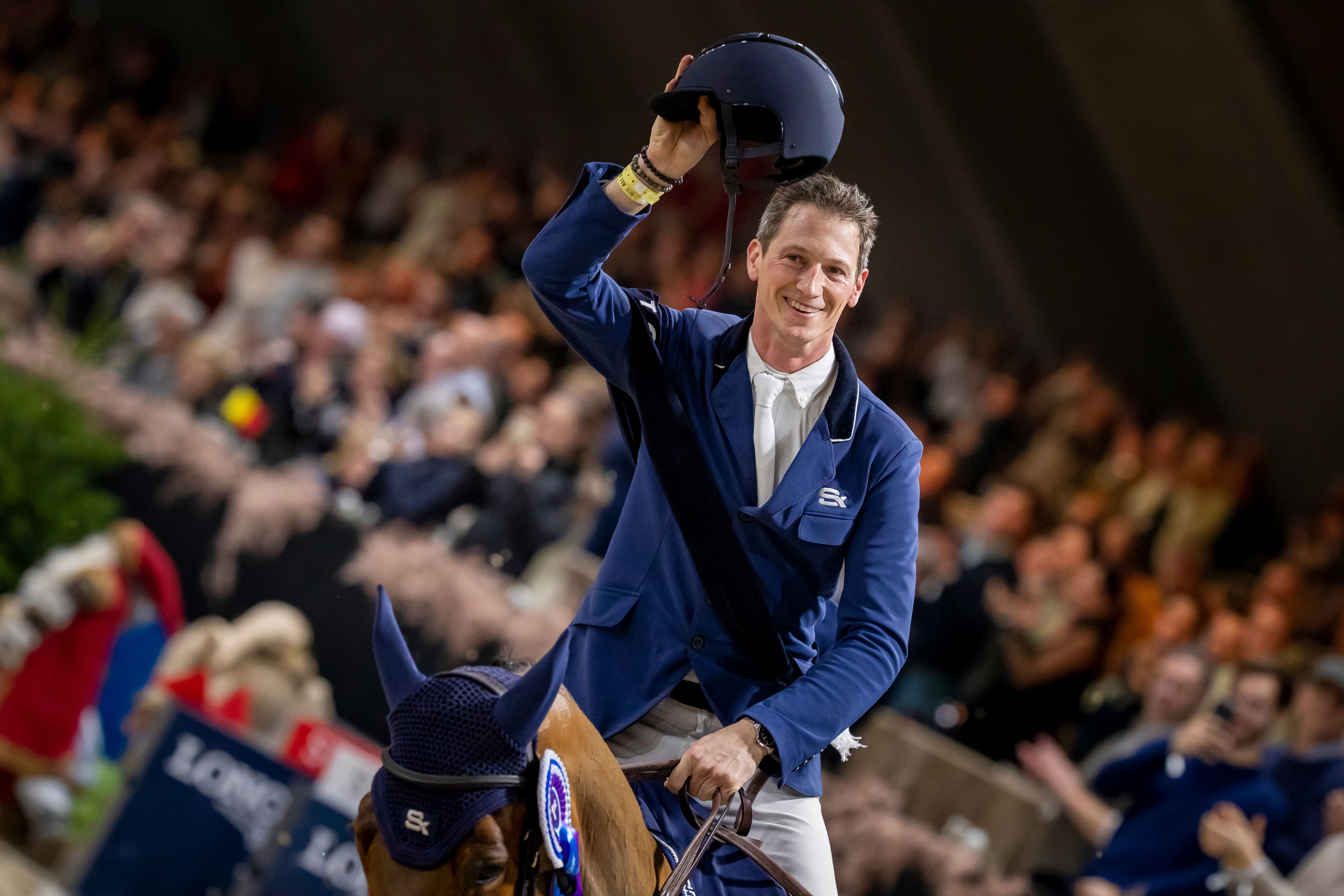
Europe still dominates — but the map is international
The top 10s are heavily European, with Germany, France, the Netherlands, Belgium, Sweden, Switzerland, Ireland, Italy, Great Britain and Austria all represented during the decade.
The United States is the major non-European force, principally through Kent Farrington and McLain Ward, with Laura Kraut also appearing in 2025. Brazil enters the picture through Yuri Mansur and Marlon Modolo Zanotelli.
Germany has arguably been the most consistently represented nation throughout the decade. Riders such as Deusser, Ahlmann, Ehning, von Eckermann, Kukuk and Weishaupt have repeatedly occupied top positions.
The Netherlands, France, Switzerland, Ireland and the United States also return year after year, underlining just how concentrated the very top of international showjumping remains around a handful of major nations.
A decade of changing names, but familiar leaders
Perhaps the biggest conclusion from the rankings is that international showjumping has changed considerably over the past ten years, but the very top remains remarkably difficult to break into.
Some riders — Deusser, Farrington, Brash, Guerdat, Maher, Smolders, Ward and others — have repeatedly returned to the millionaire club. At the same time, riders such as Vogel, Thomas and Kukuk demonstrate that a new generation is now taking its place among the sport's biggest earners.
And after the exceptional disruption of 2020, the financial ceiling of the sport has clearly risen again. 2025 produced the highest combined top-10 prize money of the decade, while the latest 365-day ranking has already pushed several riders beyond the €2 million mark.
The names may change, but one thing remains constant: to become one of showjumping's true big earners, winning once is not enough — staying at the top is what really pays.