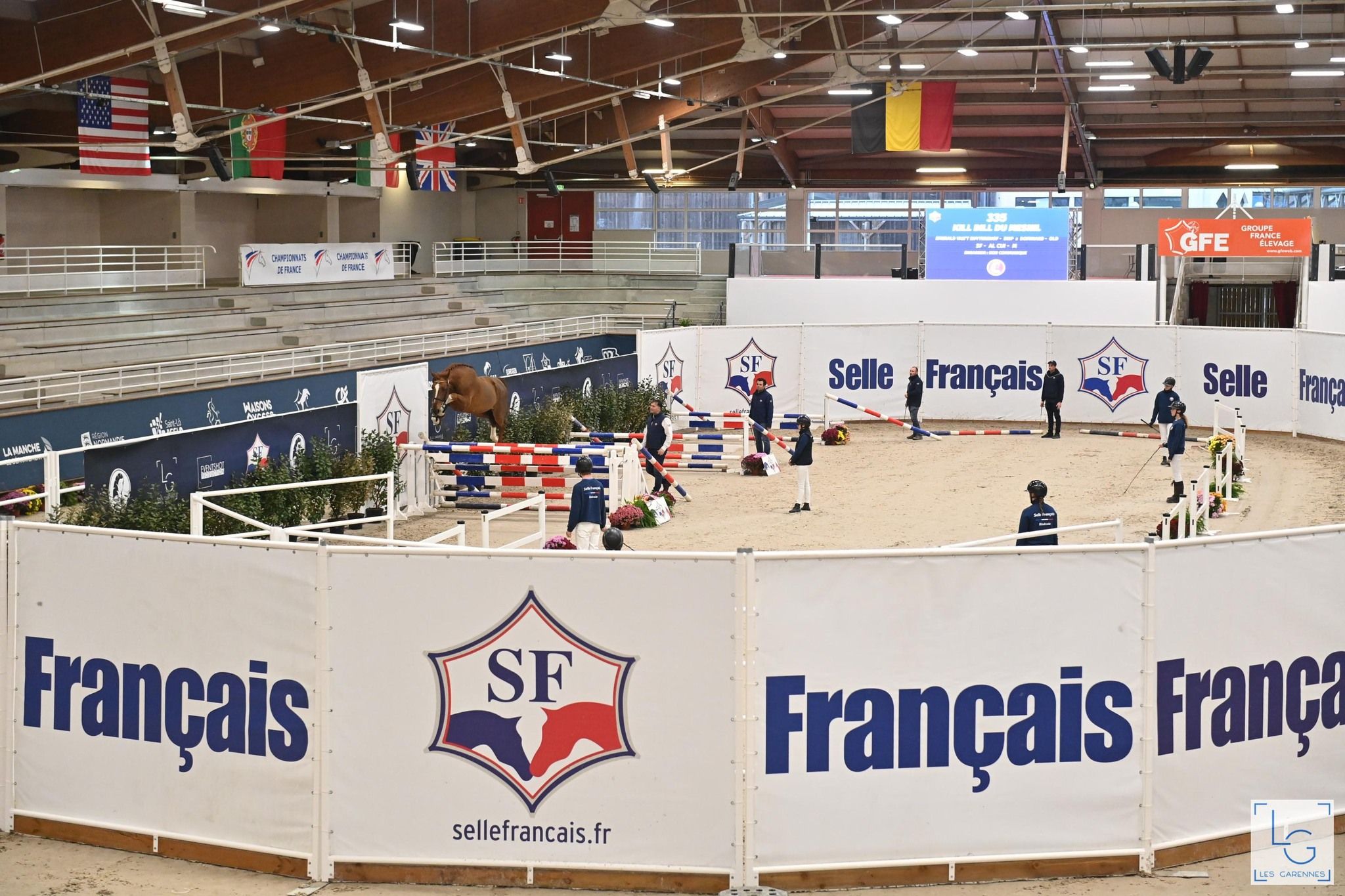

The past decade shows a clear evolution in international show jumping: a constant battle between a few dominant studbooks, each with their own strategy, scale, and genetic strengths.
Based on Hippomundo data — focusing on total earnings and number of horses — a clear picture emerges of how the balance of power has developed.
A decade of dominance: three key players
When comparing the rankings from 2016 to 2026, three studbooks immediately stand out: KWPN, Selle Français and BWP.
The KWPN dominated the early years (2016–2019), holding the number one position for several consecutive seasons. Selle Français clearly took over the lead from 2020 onward and has largely maintained that position to this day. BWP has remained remarkably consistent, establishing itself as a permanent fixture in the top three for a decade.
What stands out is that, although the order changes, the overall structure remains highly stable. The international jumping circuit has been driven by the same core group of studbooks for years.
The rise of Zangersheide
One of the most notable developments is that of Zangersheide.
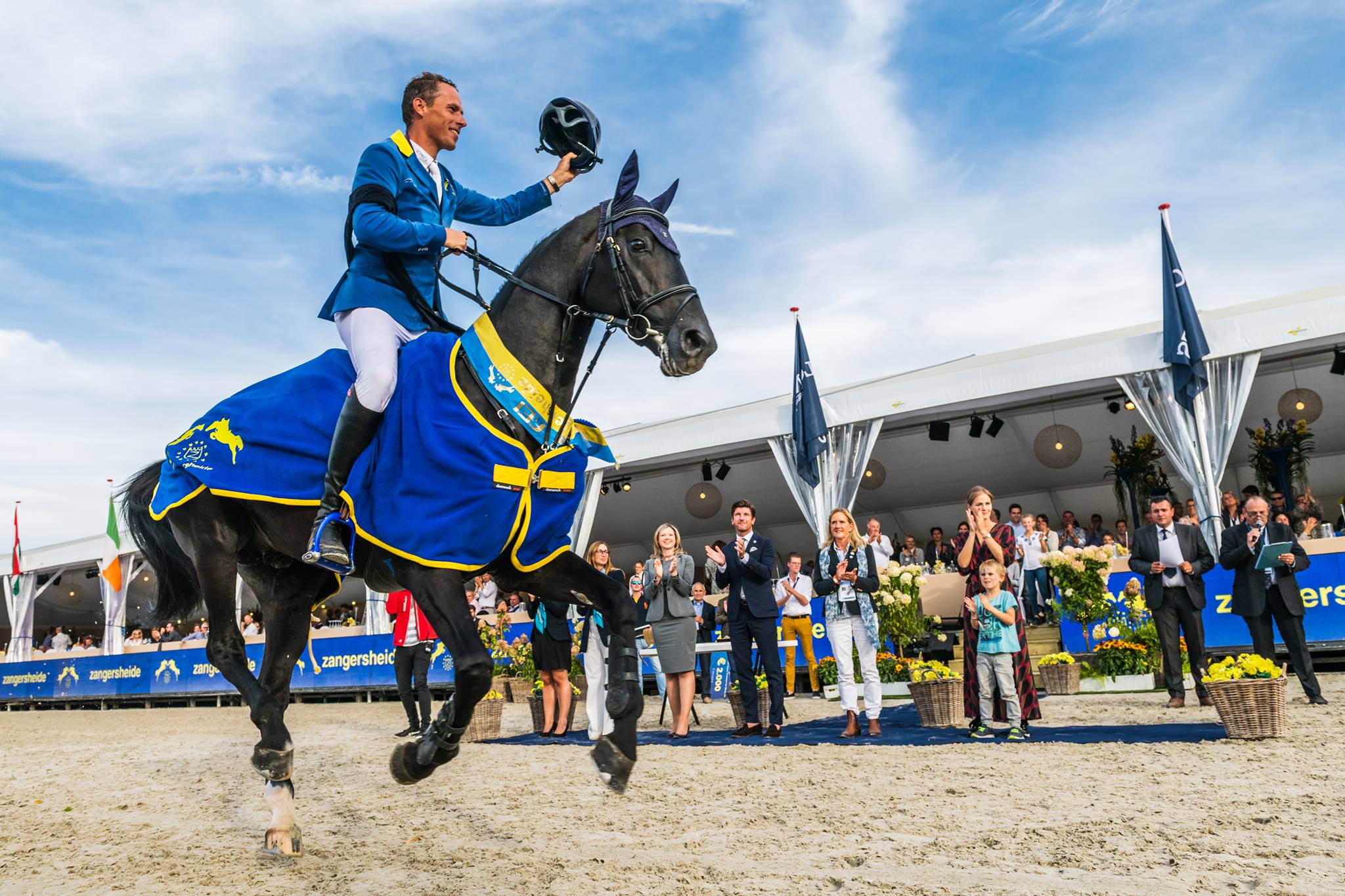
Ranked fifth in 2016 with a significant gap, it has climbed to fourth place by 2026, considerably narrowing the difference with the top three. This growth is no coincidence. Zangersheide combines an open breeding policy with strong international positioning and branding, resulting in both more horses and more top-level performances.
The chasing group: stable but at a distance
Just behind the leading group, we find studbooks such as the Holsteiner Verband and Oldenburger Springpferd.
Holstein remains a benchmark thanks to its strong genetic foundation, while OS continues to grow steadily and consolidate its place in the top six.
Behind them are studbooks such as the Westfälisches Pferdestammbuch, Hannoveraner Verband and Irish Sport Horse — consistently present, but rarely breaking into the very top tier.
Scale versus efficiency
Looking not only at earnings but also at the number of horses reveals an important nuance.
In 2016:
- KWPN and Selle Français had the largest populations (±5700 and ±5100 horses)
- BWP followed with a smaller but highly efficient group
In 2026:
- Selle Français grows to more than 7400 horses and becomes the clear leader in scale
- Zangersheide makes a major leap to over 6200 horses
- KWPN remains stable
- BWP shows limited growth, staying around 3900 horses
| Rank | Studbook | Earnings | # Horses |
|---|---|---|---|
| 1 | SF (Selle Français) | €28,667,621 | 7420 |
| 2 | BWP (BWP) | €24,959,085 | 3955 |
| 3 | KWPN (KWPN) | €23,297,052 | 6178 |
| 4 | Z (Zangersheide) | €22,001,288 | 6266 |
| 5 | OS (Oldenburger Springpferd) | €15,282,824 | 2913 |
| 6 | Holst (Holstein) | €13,728,831 | 2717 |
| 7 | Westf (Westfalen) | €5,809,126 | 1201 |
| 8 | ISH (Irish Sport Horse) | €5,462,844 | 1147 |
| 9 | Hann (Hannover) | €5,191,277 | 1536 |
| 10 | sBs (Le Cheval de Sport Belge) | €3,132,504 | 875 |
Certified by Hippomundo © 2026
The conclusion is clear: growth in numbers plays a key role in achieving total earnings. But scale alone is not enough. BWP, for example, consistently delivers top results with a relatively smaller population, highlighting strong efficiency per horse. Zangersheide, on the other hand, combines growth with performance, closing the gap with the traditional leaders.
Conclusion: a shifting balance of power
What these ten years clearly show is that dominance in show jumping is not fixed, but the result of continuous evolution. Established studbooks remain strong, but the gaps are narrowing and competition is intensifying.
Where a few studbooks once clearly set the tone, today we see a broader and more dynamic playing field. Growth, internationalisation and strategic breeding decisions increasingly determine who reaches — and stays at — the top.
The future will likely belong not only to the largest or most traditional studbooks, but to those that best combine quality, scale and vision.