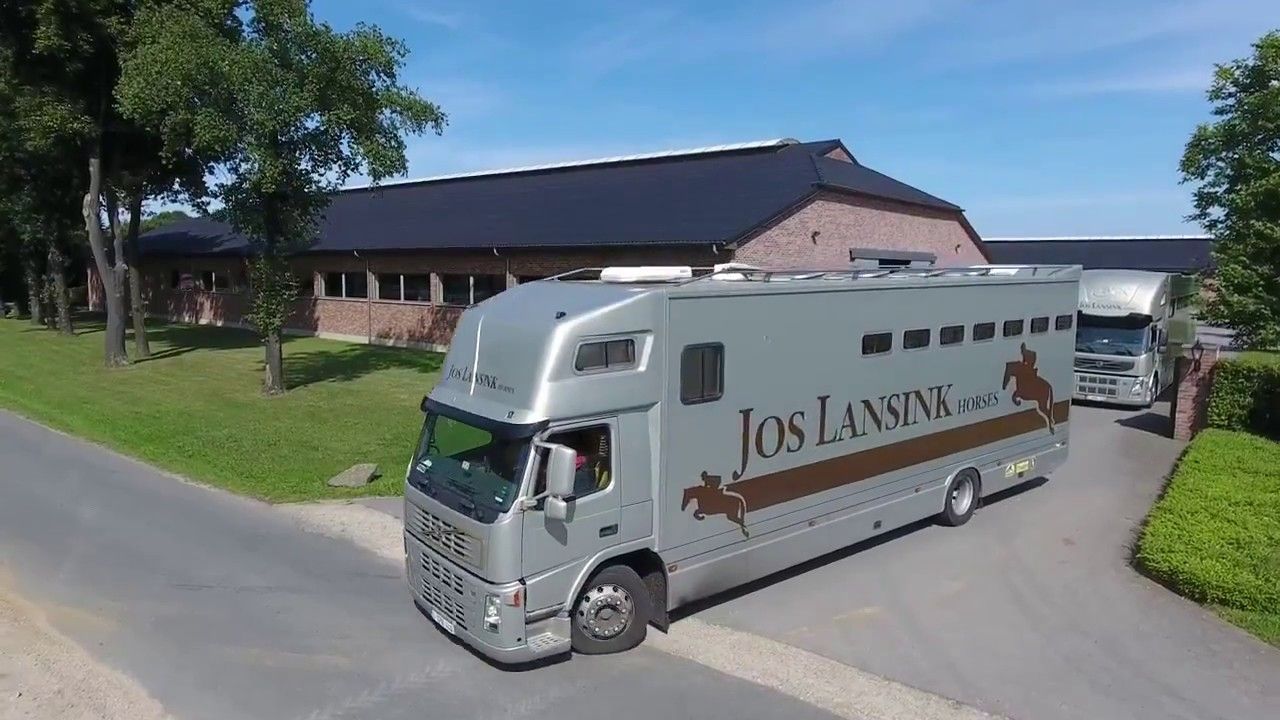

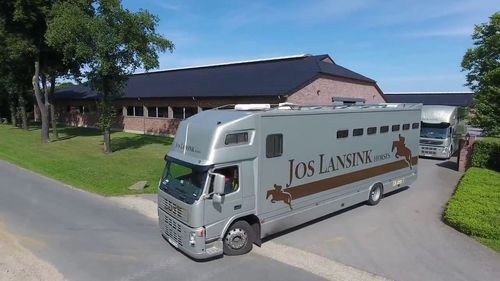
Jos Lansink (61), the 1992 Barcelona Olympic Champion, can now call himself the new national coach of the Dutch showjumping team. Lansink started his career in the Netherlands, before moving to Belgium and working for Zangersheide. Since 2004 Lansink has run his own jumping and trading stable. Hippomundo spoke with Lansink about his new position and his vision on breeding.
You have been the new national coach of TeamNL for a few weeks now. How are you settling into your new role?
Everything is still very new. I have already spoken to some riders in private and tried to plan for the new season. However, it's a challenge, because so far four World Cup competitions have been cancelled due to Covid-19 (Jumping Amsterdam, Basel, Bordeaux and Gothenburg). It is now more difficult for the horses to get into the rhythm for the World Cup final. For a final of that calibre you really need rhythm.

The former (Rob Ehrens) and current national coach (Jos Lansink) of teamNL
What are good qualities for a national coach according to you?
A national coach has to have the correct management, so the riders have enough competitions under their belt without being burnt out. You have to have a goal together and work towards it with a good plan. Even if it doesn't work out, at least you've done everything you can. If you just do something out of the blue, you will not achieve the desired results.
Do you have certain goals for the team?
That is a very simple question. Delivering performance, of course. Naturally that depends on the horses and riders and there are always factors that you cannot influence as a national coach. It would be great if we could finish in the first six as a team at the World Championships in Herning and thus qualify directly for the Olympic Games in Paris in 2024.
What do you think of the FEI's new Olympic format (three riders instead of four, no drop score)?
Opinions are very divided on this. Personally I think things can go wrong too quickly with this new format. For example, if the first rider, for whatever reason, makes a lot of mistakes, the second and third riders are only riding for the honour of the country, but they can't make up for those mistakes. With a drop score, it is still possible to fix or make up for one bad performance, which keeps the competition exciting. So personally, I would still choose the old format.
In another interview you said: "We do have good riders, but are missing the top horses at the moment". What are the horses missing?
Back in my day, we used to have a lot more top horses that stood out above the rest, such as Ratina Z, Topgun and Egano. We certainly don't have bad horses now, but they are missing the very last thing. That is why it is even more important to have a good plan. The TeamNL riders are riders who are good at championships, which is quite different from an ordinary Grand Prix on Sunday.
What should breeders pay attention to in order to breed those top horses in the future?
Actually, the whole picture is important. Attitude, hardiness, carefulness, power and rideability. You can learn to cope with one fault, but with three or four it becomes difficult. So it is important to get as many positive points in a horse as possible. At a high level it's also very important that the horse is willing to work, that it accepts what the rider asks. Often you see that the longer the rider is riding the horse, the better the coordination and therefore the better the performance.
What many people may not know is that you are also a breeder, and a successful one at that. Two of your products have already been approved. Last week the stallion Notting Hill JL (Cumano x Nabab de Reve), bred by you, was approved by the KWPN and in 2021 Chaudfontaine JL Z (Chacco-Blue x Nabab de Reve) was too, both out of your mare Valentina van 't Heike.
Yes, I try to breed good sport horses. I mainly breed with mares that we have competed in the sport themselves. We get about 7-10 foals a year, mainly through ICSI or embryo transplants. The advantage of these techniques is that you can get several foals a year from a good line and you can try several stallions. However, we always try to apply these techniques in a way that is as animal friendly as possible by using the mare's natural cycle. The horse should not be exploited. When choosing a stallion, we try to pick a stallion that gives an added value to the mare.

Approved stallion Chaudfontaine JL Z, bred by Jos Lansink
Do you also look at breeding from a different angle because you have participated fully in the sport yourself?
I think so. Breeders sometimes might say that they have already bred a 1.60m horse if a horse does well at 1.30m level. But I know from experience that between 1.45m and 1.60m, a lot of horses drop out. They often miss the attitude or the ability to perform.