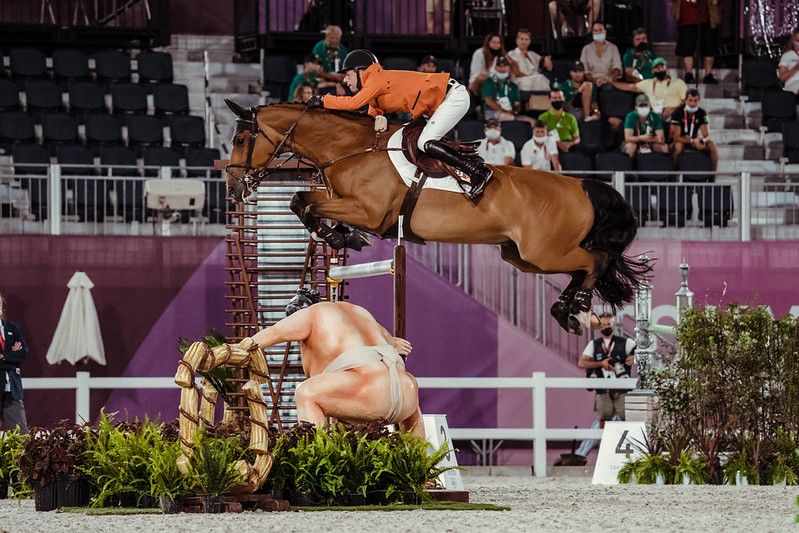
Every month Hippomundo interviews someone who has value and meaning for the equestrian sport. This month it is none other than Bronze medal winner Maikel van der Vleuten. How was his experience at the Olympics and how does one train a horse up to the Olympic level? Hippomundo found out for you.
First of all of course, congratulations on the Bronze medal in Tokyo. Could you tell us about your experience at the Tokyo Olympics?
"I have been to the Olympics three times now and it is quite an experience in itself. It is the biggest event in the world. The Olympic Games is the highest achievement for any sport, so it is also a dream and an honour to be able to participate in it. What makes it so special is when you get to stay in the Olympic village, where all the athletes from all over the world sit together. Normally you are always with the same riders. Despite Covid-19 the Games were very well organised. Everything was well coordinated and went very smoothly. We were allowed to have normal contact with the fellow athletes, but we had to do a corona test every morning."
When you are waiting to go into the ring for the jump-off, how do you prepare? And how does it feel to finally have the Bronze medal around your neck?
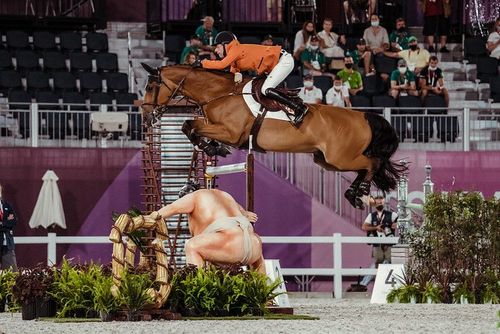
"When I stand at the entrance of the ring I try to keep my focus. I was very happy that my father was there. He knows me and my horse so well. I was the last competitor in the jump-off, my dad could see the previous jump-off candidates and so we could make a plan of what was needed for a medal. It was just that they rode so incredibly well and fast, I had to take a lot of risks. When I'm in the ring, I try to keep my head cool and carry out my plan. One silly mistake and your medal chances are gone. I am so concentrated in that moment that I am not thinking of anything else.
"Yes, and then to have that medal hung around your neck is unbelievable. Also because I didn't expect this from Beauville Z. A year ago I didn't even dare to dream that I would be in the Dutch team with this horse. I knew I had a good horse, but I did not expect this in the short term. The question for me was whether he was going to last. Normally you work towards the GP, but now it has to happen from the beginning and you ride a few GPs in a row. You also have to wait and see how your horse reacts to the long-distance travel. Every athlete works towards this for four years, and in this case five years. The last three months before the Olympics, every day revolves around working towards that. Every rider has worked so hard to get there and when everything falls into place, it's fantastic. Not only for me, but for the whole team.
We saw such beautiful images pass by last weekend, where you and your father competed in the Global Champions tour in Rome. What is it like to compete in this sport with your father? Did you always know you wanted to be in the horse industry?
"That is unique. You don't have that many examples of a father and son performing together at the highest level. Hopefully we can do this for a few more years. When I was born, he was already working professionally. We have worked hard to ensure that I can also compete at the highest level, but without the right horses this is impossible. Behind the scenes, we are always busy training and preparing the young horses. It is always a search to get talented horses in the yard. We often buy the horses when they are still young, that way they are still affordable and if you train them yourself, you can train them as you wish. When it comes to the highest level you know each other through and through.
When asked if Maikel always wanted to be in the horse business, he answered: "Yes. I have always found it very nice to be around the horses and ponies. My parents never had to push me. I have also always played football and that did not go badly either, but at a certain point, you have to make a choice. And it wasn't difficult for me. Of course, I have the advantage that I come from a horse family and that the ponies/horses, equipment and a lot of experience were available. That also helped me a lot during my childhood."
Could you tell us something about Beauville Z's background? How did he end up with you and what was he like as a young horse?
"Beauville came to us in a beautiful way, about five years ago when he was six years old. We had a student from Spain in our stable and she was looking for a good horse. We came into contact with Holger Hetzel, who was organising an auction at the time. He advised her to buy Beauville. We went to the auction and bought this horse. He was not popular at all, because people thought he would be more of an amateur horse. She trained him for a year and a half and almost always jumped clear. He didn't really stand out, but he never did anything stupid. At one point, the rider said she wanted to sell him because he had too much quality and was too careful. Then my father came up with the idea that I should try him for a few weeks. I trained him at home and took him to a few competitions at 1.35m level. He did everything flawlessly and then we bought him. To be honest, I didn't think of him as a top horse yet, but it turned out to be much more than that."
What qualities do you think a top sport horse should have?
"I think the attitude is worth a 10. A horse has to want to do it, he has to want to fight to get over the jump. When they have this attitude, it makes a difference. I noticed this especially with Beauville; with the right attitude and mentality this horse has come a long way. Of course, for the highest level the horse has to have the abilities. A horse has to be careful and have power, so he has to be able to jump high jumps easily. The more power, the longer they will last at the highest level. The click with the rider is also very important. Over the years we have learned to trust each other. And then you have factors like the health of the horse. If the horse is naturally healthy, has a strong body and legs, the chance that he can handle the top sport is bigger. A correct position of the legs of course also helps with these things.
So in short, to become a top sport horse, it must have the right click with the rider, a strong body, attitude, ability and be careful."
What do you pay attention to when buying new talents?
"We often buy them at the age of 4/5. What I pay attention to then is whether I feel comfortable and pleasant on a horse. I like horses that have a lot of blood and are hot, so they want to go forward. I try to assess whether they feel intelligent. They do not have to jump half a metre high, but they do have to feel that they are focused and know what they are doing. You can only find out if they really have the correct attitude when you ride them for longer, but if they already jump many clear rounds as a young horse, that says a lot about their character and competitive mentality. All the horses that I have had success with so far, as a young horse, almost always crossed the finish line clear."
"In addition, we also breed with 5 mares that my father or I have ridden and sometimes we buy a few foals in addition. So every year we have between 5-10 foals. We make our choice of stallions by feeling, but we often choose proven stallions. From these stallions you have seen the competition mentality and the good and weak points. We then try to compensate for the mare's weaker points with the stallion's stronger points."
What is the nicest/best horse you have had so far? And why?
"I find that very difficult. Verdi TN has always been special. I have won so many medals with him and had success at the EC, WC and Olympics. I started riding him when he was four years old, so it's very special that you have trained him yourself. But I have had many good horses, also in the juniors and young riders. Actually, every top horse that you have won a prize with or achieved something with is special.
What do you train on in the training sessions at home? Which exercises are important?
"This differs per horse, but I always try to make the weaker points of a horse better in the training. Good dressage work is important. Here you keep the horses in shape and obedient. Occasionally, when there is no competition for a fortnight, I do some gymnastic lines, not high, but more to keep the body loose and in condition. With younger horses we practice a bit more competition style at home, practising a bit more lines. That way you do the right training for each horse."
Finally, do you still have a dream?
"I would like to compete on the highest level for many more years. You always have to deal with ups and downs and then it would be nice to have regular successes. Trying to peak at competitions where there is more to be earned and gained."