
Due to the coronacrisis, we could all use a little more inspiration to keep ourselves and our horses motivated.
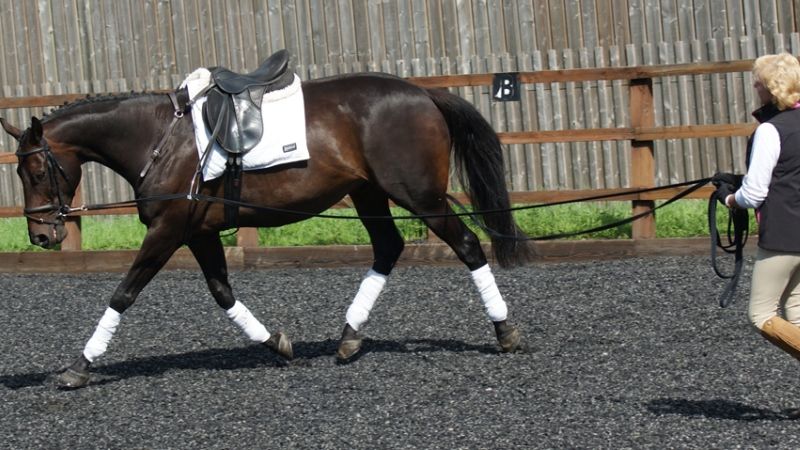
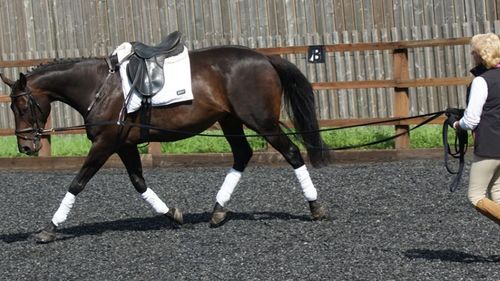
To keep variety in the daily life of the horses, it may be interesting to try long-reining. We will provide you with some tips.
General
Long-reining encourages the use of the hindquarters of the horse. The use of two lunges creates a greater interaction between human and horse than when a horse is lunged with solely one lunge. The two lunges act as two reins, therefore the term "long-reining". The inside rein is used to direct the horse as well as allowing a nice inside bend. On the other hand, the outside rein controls the speed, keeps the circle nice and round and engages the hindquarters. Additionally, with the outside rein you can make half-halts.
Long-reining is oftentimes used while breaking and backing young horses. This way a young horse can get accustomed to the bit and learn the aids for turning, halting and walking on, without the added weight of a rider.
Variations
To ensure the work doesn't get too tedious, you can add a few variations. For example, lots of transitions and speed changes create a strong, willing and obedient horse, which is incredibly beneficial in any show ring.
Furthermore, you can adjust the size of the lunging circle. A smaller circle enhances balance and flexibility, as well as the engagement of the hindquarters. Beware of the fact that this is extremely hard and straining on a horse's muscles and tendons so try to alternate between bigger and smaller circles.
You can also introduce poles or cavelettis to the lungeing work. This stimulates the horse's coordination and resilience.
If you wish to learn more about long-reining, visit Paarden-blaadjes.